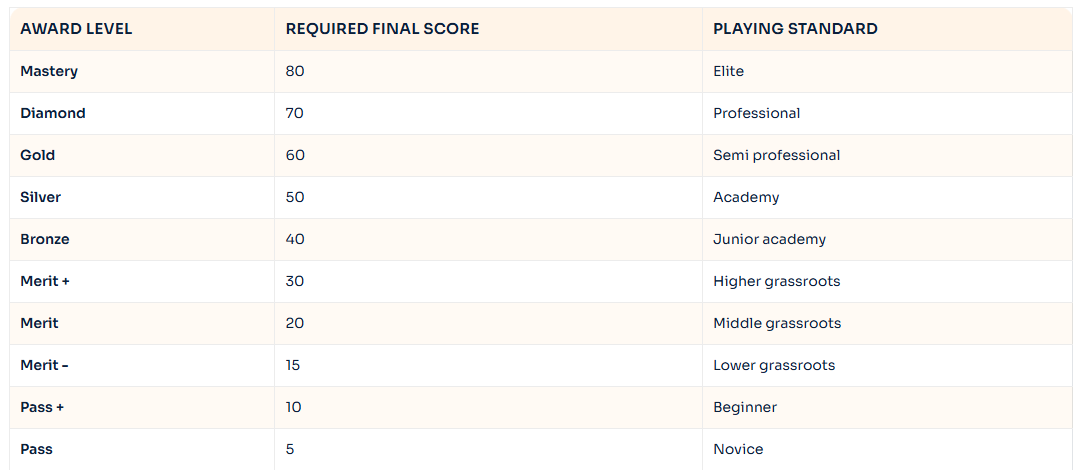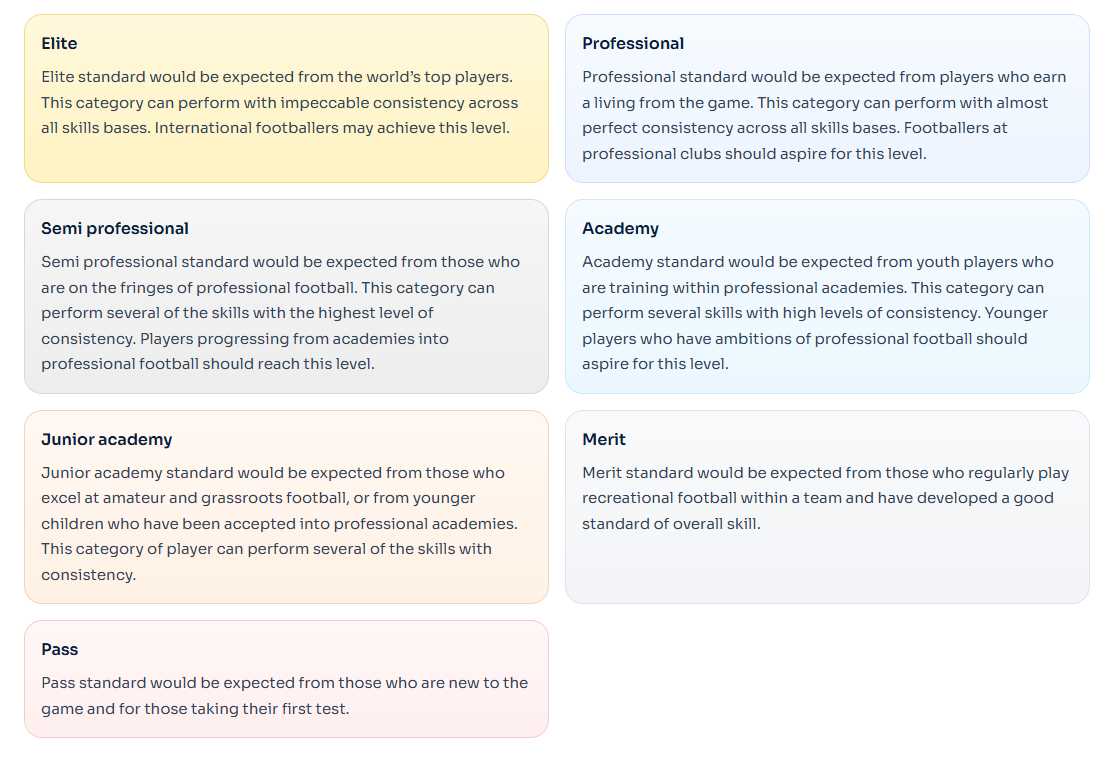
The International Football Skills Test and the International Goalkeeping Skills Test offer one of the most powerful, standardised, and objective frameworks for organising and evaluating players during football trials. Their value lies not only in measuring skill, but in structuring the entire trial process so coaches and managers can make clearer, fairer, and more evidence‑based decisions.
The football skills tests transform trials from subjective, inconsistent assessments into data‑driven evaluations that measure technical, physical, and decision‑making qualities with reliability supported by contemporary sport‑science research. They help coaches organise squads, compare players fairly, and identify potential that may be missed in traditional trial formats.
The International Football Skills Test and International Goalkeeping Skills Test provide:
- Standardised skill measurement — every player completes the same tasks under the same conditions.
- Objective scoring — reducing bias and levelling the playing field.
- Comparable datasets — allowing coaches to rank, group, and select players with clarity.
- Efficient squad organisation — trialists can be sorted by technical level, physical output, or positional suitability.
- Evidence‑based talent identification — aligning with modern research on what predicts success in football.
These qualities make the tests especially powerful during trials, where time is limited and decisions carry long‑term consequences.
How the Tests Measure Skill
Both tests break down performance into quantifiable categories such as:
- Ball control
- Passing accuracy
- Dribbling speed
- Shooting or distribution
- Agility and movement
- Performance and decision‑making under pressure
- Goalkeeping‑specific actions (handling, diving, footwork, distribution)
This mirrors the multidimensional approach recommended in modern talent identification research, which emphasises technical, physical, and psychological indicators rather than relying on coach intuition alone.
Why Coaches and Managers Benefit
The football skills tests help coaches:
- Organise squads logically Players can be grouped by skill tier, position, or developmental need.
- Identify hidden potential Some players underperform in match‑play trials due to nerves or lack of familiarity. Objective tests reveal their underlying technical ability.
- Make fairer decisions Data reduces unconscious bias and ensures every player is judged on the same criteria.
- Communicate clearly with parents and players Results provide a transparent explanation for selection or non‑selection.
- Track development over time Repeated testing creates a longitudinal profile of each player’s growth.
Additional Benefits the International Footballing Skills Tests Provide
You can strengthen the trial process even further by considering:
- Psychological readiness indicators Confidence, resilience, and adaptability are increasingly recognised as key TID factors.
- Benchmarking against age‑group norms Helps contextualise performance and identify outliers.